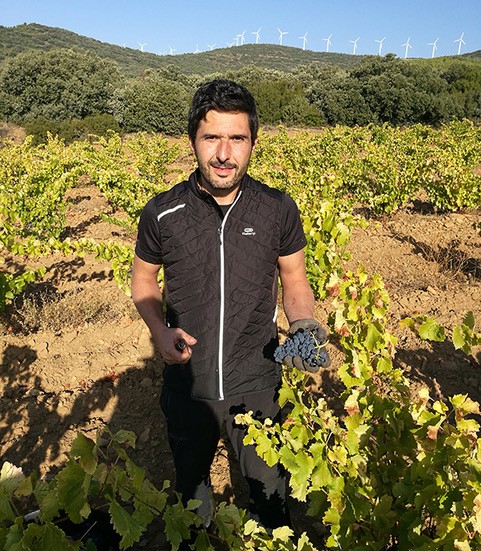
Gonzalo Celayeta
Gonzalo Celayeta, born in Olite (Navarra), began his career in 2000 at the Navarra Viticulture an Oenology Station (EVENA). After training and working there for almost four years, he decided to broaden his horizons and went on to produce and advise different Wineries in Navarra and Rioja, but it was in 2004 when he decided to start his personal project “Gonzalo Celayeta Wines”.
In 2006 he also became technical director of Bodegas San Martín, also in Navarra, and at the same time continued to develop his project in a more selected way, even with limited editions that would not always be repeated over time and with the idea of gradually bringing out new wines, new projects always with a personal and differentiated touch that contain a little story behind them. In 2014 he ventured into another new and exciting project, Bodegas Unsi, with a small winery located in Olite and vineyards in San Martín de Unx, a town where practically all of his productions are focused. Unsi is a Project that was born with the idea of recovering old abandoned Garnacha vineyards in mountain areas, places that are very difficult to access but with very important charm and authenticity. This is how he joins this project where, with the help of some winegrowers from the town, he launches the Winery that today has established itself as one of the best Garnachas in Spain. But returning to Gonzalo Celayeta Wines, which is really his personal project, we can describe his philosophy of always making wines with some story behind them, something that transmits an emotional experience, authentic wines and with something different either due to their dedication, elaboration or variety (always small
productions).
It can be defined as a traditional project in terms of preparations, looking for typical or traditional varieties and made with minimal interventionist
(respectful) methods and that can reflect the character of the area and variety from which they come.
On the other hand, the way of transmitting the Project, seeking personal experiences and stories, has a modern touch. We can classify the wines as authentic and representative of the area where the grapes are harvested. They always seek a more mineral than commercial profile. We can define them as wines with a gastronomic profile, more for the table
than for the bar and always with good aging potential.